


Trusted Partner in Solar Energy Solutions
Renewable energy EPC (Engineering, Procurement, and Construction) company specializing in end-to-end solar power system solutions for industrial, government, and residential sectors.
Solar System
© solardayanusantara.com
One Stop Complete Solution Provider
for Solar Renewable Energy
Solar Power Generation System
We provide a wide range of solar power systems designed to meet the energy needs of the industrial, government, and residential sectors.
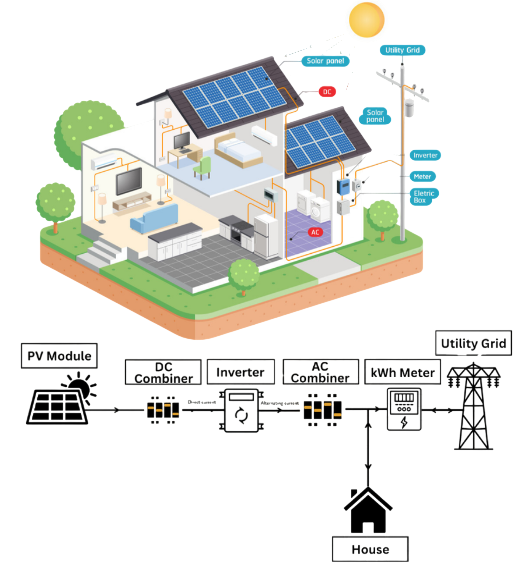
ON-GRID SYSTEM
ON-GRID SYSTEM OPTIMIZATION TIPS
- Install solar power plants according to daytime consumption profiles.
Use load log data for accurate design. - Use an automated load shifting system.
Shift heavy loads (compressors, pumps, air conditioners) to 9:00 AM–3:00 PM. - Perform regular monitoring.
Ensure there is no oversupply to maintain optimal efficiency. - SCADA or BMs Integration
For large projects, the system can be integrated with a Building Management System.
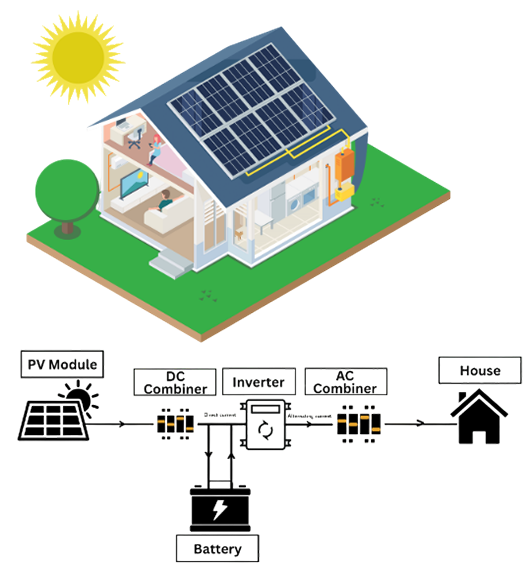
OFF-GRID SYSTEM
OFF-GRID SYSTEM OPTIMIZATION TIPS
- The solar power plant’s capacity must be sufficient for all daily needs plus a reserve. Add a 20–30% margin to the actual consumption.
- Choose a battery type based on your needs and location.
Lithium LFP for high efficiency and equipped with a BMS for battery protection. - Use a reliable off-grid inverter that supports auto-starting of the generator.
Ensure stable output for sensitive equipment. - Set load priorities (load management).
Loads are divided into critical, important, and non-priority categories. - Daily monitoring and system status alarms.
Monitor battery, inverter, and solar yield conditions.
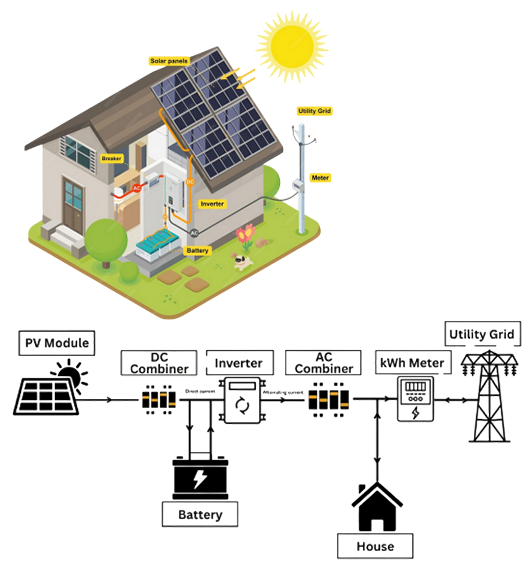
HYBRID SYSTEM
HYBRID SYSTEM OPTIMIZATION TIPS
- Use an EMS (Energy Management System)
Set energy priorities: PV → Battery → PLN/Generator. - Design the battery according to nighttime consumption.
Don’t oversize or undersize it; use an efficient DoD (80–90%). - Optimize load shifting times.
Prioritize loads when PV production is high. - Monitor battery and inverter status.
Avoid overcharge, overdischarge, and blackouts. - The generator should only act as an automatic backup.
Avoid inefficient generator operation (low load).